

Vegan Dholl Puri
Ingredients
1 cup (225g) yellow split peas, soaked for several hours
4 cups (480g) flour
1 cup (235ml) water
1 teaspoon cumin
1 teaspoon turmeric
Instructions
- Boil the split peas until tender.
- While the split peas are boiling, combine flour, water, cumin, and turmeric to make a soft dough. Cover and set aside for at least 20 minutes.
- Once the peas are soft, puree into a soft mash.
- Shape the dough into small balls about the size of a ping pong ball. Add a dimple into the centre of each, then fill the dimple with the peas. Seal the dough over the peas.
- Flatten the dough as flat as possible.
- Heat oil over medium heat and fry the puri until brown on both sides.
A longer and more detailed description
Remember when we made a flattened dough thing for the Maldives and it was really tasty and I absolutely raved about it and ended up making it twice in one week because I liked it so much? Remember that?
It turns out Mauritius and the Maldives have a lot in common. They’re both Indian basin countries. Both have significant Indian influences in their cuisines. Both have few options if I don’t feel like making fish.
So this dish might look familiar. Some would argue it’s the same dish. I put it to you that this being made with split peas and the other being made with chickpeas makes all the difference in the world. You’re welcome to be wrong about this. I’m not cheating, you’re cheating.
Make your split peas by cooking them until they’re edible. While they’re doing that, make your dough by slapping flour, water, and a couple of spices together until you have something soft. Set that aside, wander off, and do something else with your time.
Until it’s time to cook! Form your dough into little dimple balls and fill the dimple with filling. Close it, smash it, and fry it, and repeat until you have no more dough or filling (preferably both). Serve with a curry or chutney or on its own, but most definitely pop it in your mouth and bon apetit!
Substitutions and suggestions
For serving - This can be eaten on its own, but is better when served with a curry. I made a simple little lima bean curry, but make whatever brings you joy.
What I changed to make it vegan
This one is naturally vegan!
What to listen to while you make this
There is so much reggae coming out of Mauritius, my god. I recommend starting with the Prophecy and going from there.
A bit more context for this dish
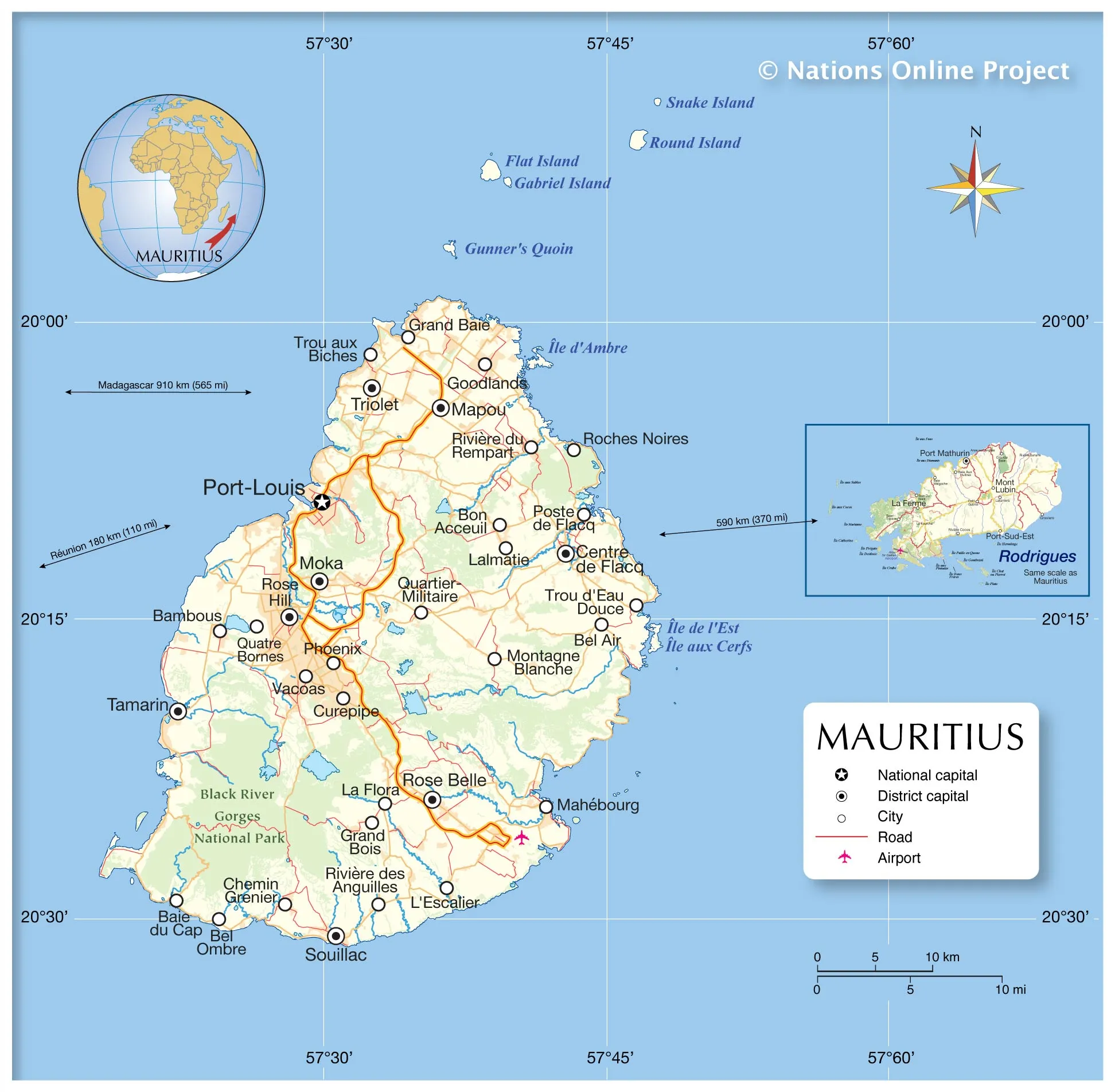
As alluded to earlier in this post, Mauritius sits in an interesting place in this project. On the one hand, island countries are particularly difficult to cook for. Their cuisines generally feature fish, and while I’ve learned quite a bit about how to create substitutions for fish, I am not a miracle worker. I turn fishes into loaves, but very little else.
On the other hand, Mauritius is in the Indian Ocean basin as well as Africa, and both geographic regions have yet to miss. Mauritius is perhaps the best illustration of why this is. Its cuisine is shaped both by the influences of east Africa as well as Austronesia trade routes. African techniques meet Indian techniques meet the island’s native ingredients in a wild blend of flavours and ideas. It’s deeply unique, and a treat to engage with.
What is particularly interesting about Mauritius, however, is its colonial history, less in the sense of the colonisers themselves, but more in the sense of how the island’s wildlife has shaped the story of colonialism, not only for Mauritius itself, but in the world more generally.
Mauritius, you see, is the former home of the dodo.
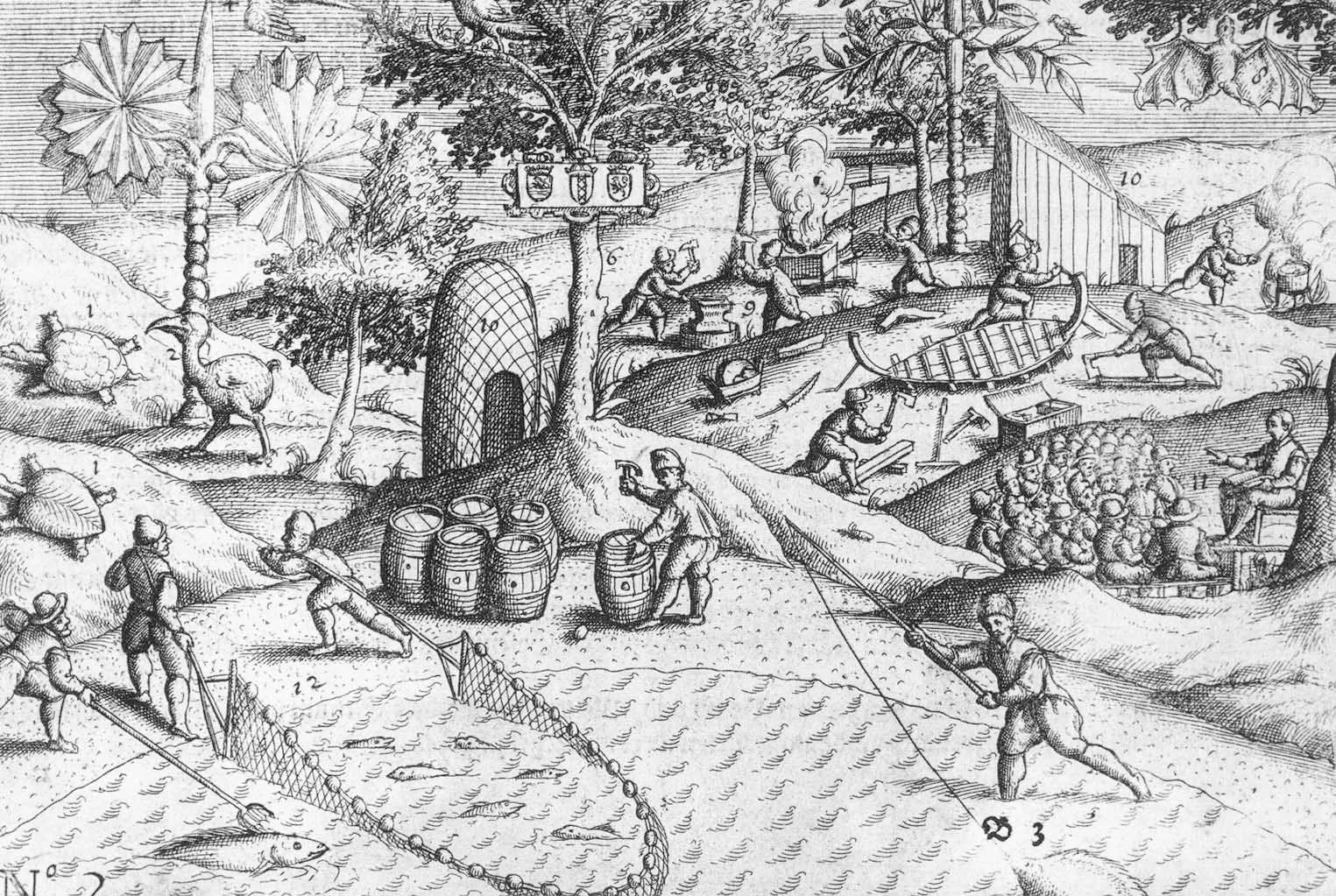 Dutch colonisers on Mauritius, with a dodo in the background (Spoiler alert: Things do not end well for the dodo)
When the Dutch arrived on Mauritius in 1598, they found an island largely devoid of people. Though the island had been discovered - first by Arab traders in the 10th century, then again by Portuguese explorers in 1528 - no one had settled on it, leaving the Dutch to be the first to attempt it. They named the island after Maurits of Nassau, giving it the name it still holds.
The Dutch settlers’ goal was simple and largely resembled the goal of every other Dutch colony - profit. Their goal was to turn a largely unprofitable island into a profitable one, preferably through the heavy application of enslaved people and sugarcane, a combination that had already turned a tidy profit in the Caribbean. In addition to this, however, they discovered that the island itself was full of interesting and exotic wildlife, much of which had no fear of humans. For explorers like Abel Tasman, bound for terra incognito somewhere across the sea, Mauritius presented an opportunity to resupply. That dodos were giant sources of meat just made them all the more appealing to hungry explorers.
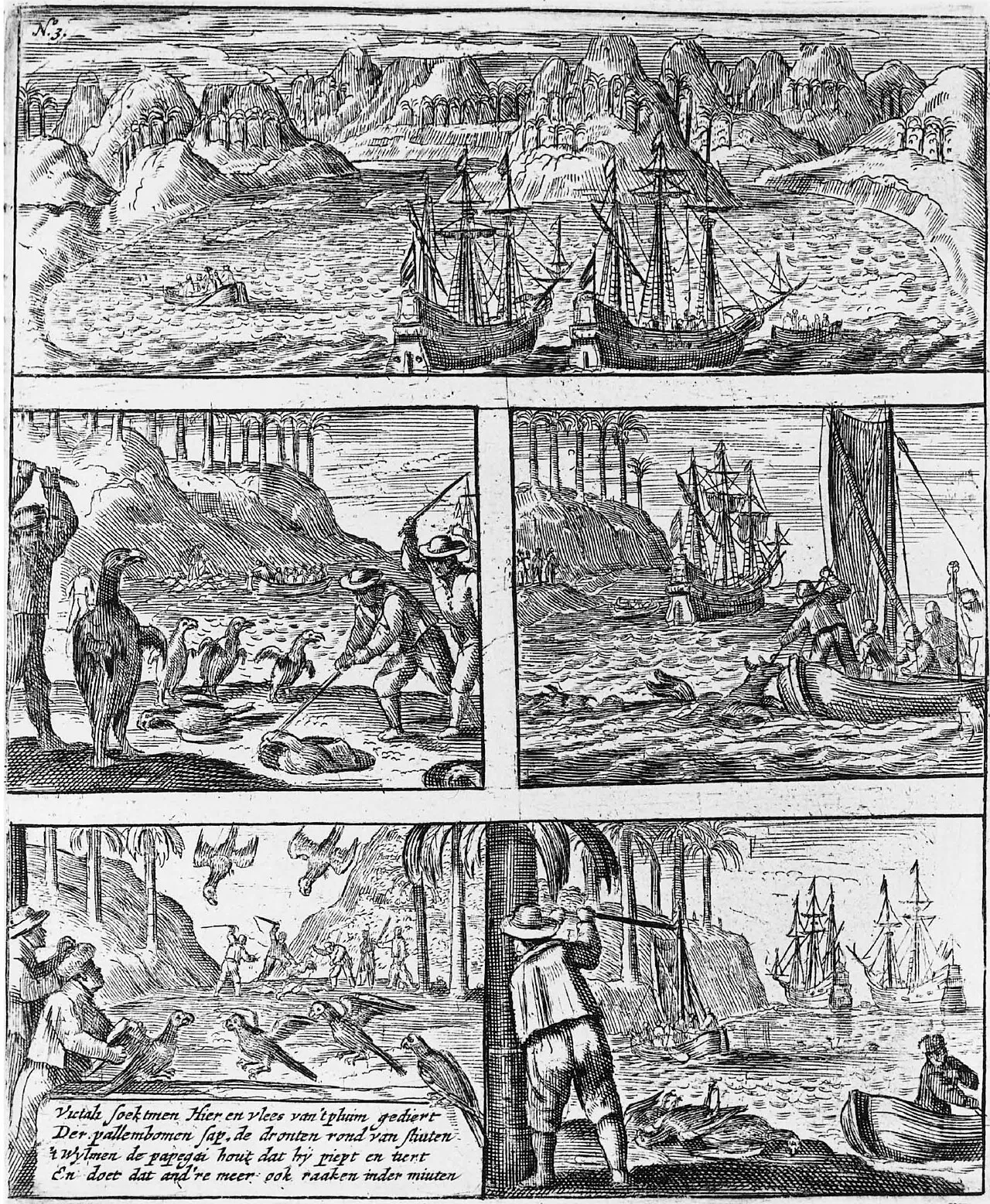 An illustration of Dutch hunters hunting dodos and other now-extinct Mauritian wildlife
Dodos were odd birds. Entirely flightless, they weighed over 15kg and stood 70cm in height, roughly the same size as a small penguin. From contemporary descriptions, they were awkward and ungainly birds that resembled bulbous geese, and which, when confronted with hungry humans, simply stared at them until their inevitable demise. For the Dutch, hunting them became a sport in and of itself, with hunters clubbing them and harvesting their bodies en masse, salting them for the long journeys either home or further out across the ocean. That they would become the butt of centuries of jokes feels almost inevitable - they were absolutely ridiculous birds.
They were also, like many island creatures, deeply vulnerable. By 1662, less than a century after their first encounter with humans, the dodos were extinct. Their extinction wasn’t solely due to human predation. Humans brought with them a bivvy of species that devastated the local ecosystem, including cats, dogs, rats, and pigs. These species devoured dodo eggs, destroyed nests and nestlings, and ravaged the local ecosystem. Paired with that was the active deforestation on the part of the Dutch in their effort to turn Mauritius into a massive sugar plantation.
The dodo was not the only species driven to extinction. When isolated ecosystems are subject to invasion, the ecosystem itself collapses, bringing its inhabitants down with it. While Mauritius may not have been inhabited by humans, it was nevertheless inhabited, and those inhabitants, like so many before and after them, paid the price of colonialism. The apocalypse of Mauritius was swift, and it was thorough.
There is, however, one difference with Mauritius, and that’s with what came after.
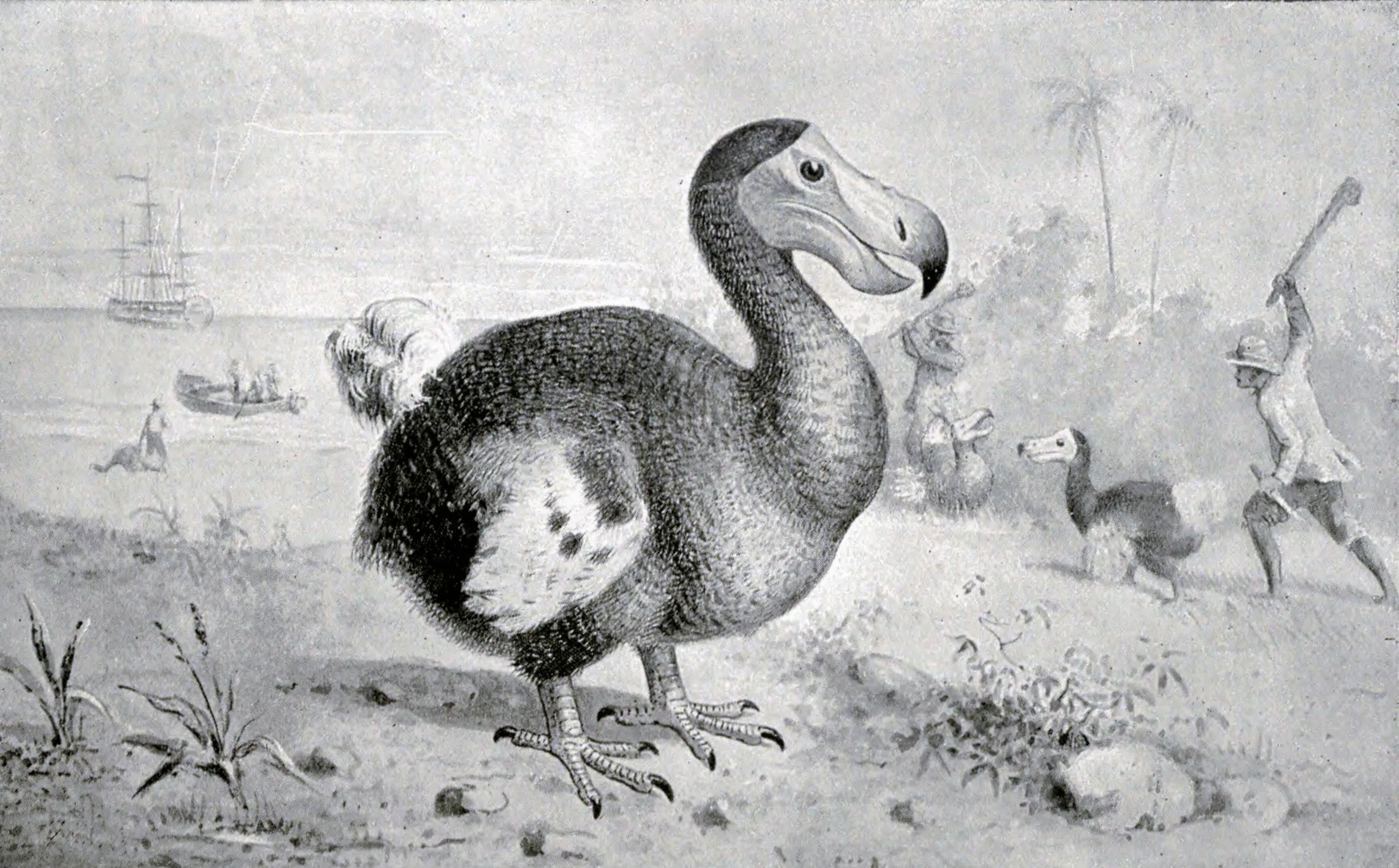 An illustration of a dodo, complete with humans hunting them in the background
Throughout the golden age of exploration, European explorers came across a wide variety of creatures that their counterparts back in Europe could not believe were real. Specimens - alive and dead - were shipped back to Europe, with boxes containing befuddled dodos, platypuses, and tortoises. The idea that there was an entire world of exotic species out there captured the collective European imagination, with dodos being but one example among many.
When dodos stopped appearing, though, both the sailors on Mauritius and the naturalists back in Europe became faced with a particular thought. Was it possible that, through their actions, humanity had caused the dodo to cease to be? The initial reaction to this was that it was impossible, that, given that each creature was a creation by God, God would not allow humanity to erase one of his works. Extinction was an impossibility, and if a species had actually gone extinct, it was more plausible to believe it had never existed in the first place.
By the 19th century, however, palaeontology and the increasing discovery of fossils made the possibility of life before humanity more and more obvious. There had been species before humans that had died, with humans never having been aware of their existence. Extinction was real, and if extinction could be real, it stood to reason that the mechanisms could be varied. In 1833, a British magazine published an article using the dodo as a case study in human-driven extinction, catapulting the dodo to the world’s collective attention. By the time Darwin published his Origin of Species, the mechanisms of extinction were understood, as were their implications. Species could vanish from the Earth entirely, and it could be propelled through human action.
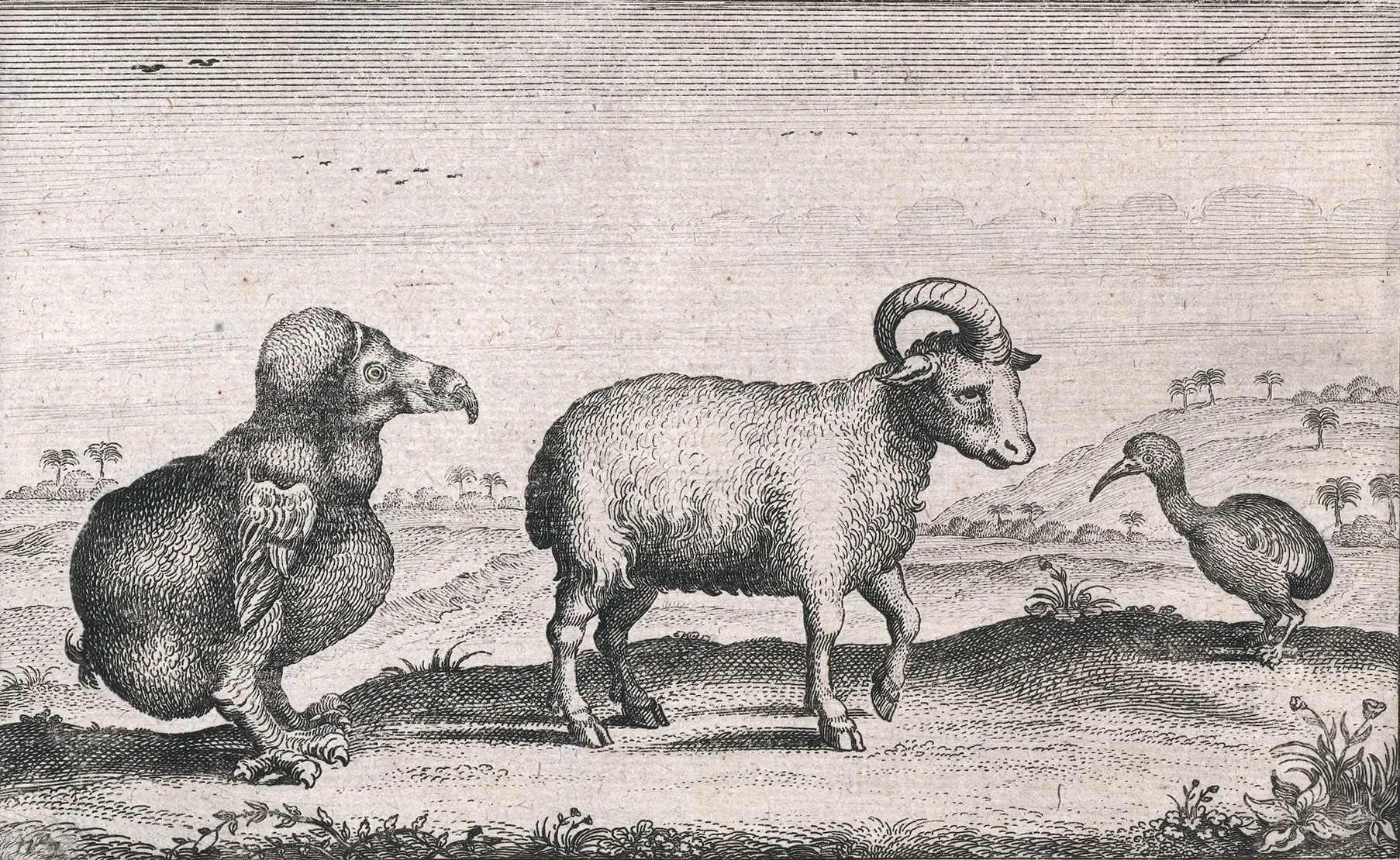 Illustration of a dodo and a red rail, both extinct
Rallied by the memory of the dodo, conservationists swung into action, hailing the extinction of the dodo as a warning call for other species around the world, especially in sensitive ecosystems. Kiwis, kakapos, Falkland foxes, and creatures around the world could vanish, conservationists argued, if action was not taken to save them.
Action was taken. Governments around the world took action to save vulnerable species, and for many, they are now rebounding. The irony of the story of the dodo is that, on the blood of the dodo, countless other species were saved. It is thanks to the dodo that there are still kiwis in the world. Though neither should have been at risk, it is better to lose one than to lose them all.
The dodo, for its part, is not fully gone from the collective consciousness of humanity. It has become an icon of Mauritius, featuring on its currency and state seal. While the creatures themselves may be gone, their legacy is very much alive in the species that survive because of their loss. Our world is richer because of the lessons learned from the dodo, however painful those lessons might have been.