

Vegan Domoda
Ingredients
1 small pumpkin, cubed
1 onion, diced
3 tomatoes, diced
1 can jackfruit
4 cloves garlic, minced
2 chili peppers, chopped
5 oz (140g) tomato paste
1 cup (240g) peanut butter
3 cups (750ml) vegetable broth
2 tbsp lemon juice
Salt
Pepper
Instructions
- Heat oil in a pot over medium heat. Add the onions, and cook until translucent.
- Add the garlic, tomatoes, and chili peppers. Stir, and cook for another minute or so.
- Add the tomato paste, peanut butter, jackfruit, lemon juice, and vegetable broth. Stir to combine, and let cook for ten minutes.
- Add the pumpkin. Bring to a boil, then let simmer for at least 30 minutes. Serve over rice, and season with salt and pepper to taste.
A longer and more detailed description
I’m aware that it’s basically a meme at this point that the peanut butter in my cabinet is not destined for sandwiches. It is a staple food of my people, and I am doing it all wrong. Oh no, my peanut butter is bound for stews like this one, because it is in stews that it truly shines.
Let’s start as we always do by heating up oil and chunking some onions into it. This will quickly be followed by our other staple, garlic, along with tomatoes and chili peppers because we’re feeling bold today. Once these are feeling toasty, add in everything but the pumpkin and give it all a lovely mixy mix.
This is where cook times become a bit subjective. When I was making this, I dumped all my ingredients in the pot as described above and let them cook while I tackled the pumpkin. If you’re more familiar with pumpkin - or, fie the thought, prep all your ingredients in advance - stick with ten minutes. Otherwise, let the other ingredients cook for the length of time it takes you to figure out how to cube a pumpkin.
I hadn’t worked with pumpkin in its non-pureed form before. The best description of it is that it’s a less cooperative butternut, which I think is damning in and of itself. My recommendation is to take its little stem off first, then carve off the shell in large swaths. Skin your pumpkin like you’re some sort of medieval torturer, scoop out its insides, and cube the rest. This will take roughly ten minutes, but will make you feel like some sort of mighty chef as you conquer that pumpkin.
As a side note, kudos to whatever human discovered that pumpkins are edible. They seem very reticent to acknowledge that fact.
Add your pumpkin to the stew, bring it to a boil, then let it simmer for at least half an hour. The longer it simmers, the more the flavours blend, but I was hungry and wanted stew, so I popped it over some rice after about forty minutes. Enjoy, and taaliba la!
Substitutions and suggestions
For the pumpkin - I admit, you don’t have to use a pumpkin. A butternut or two sweet potatoes will also work. The pumpkin is much more fun, though.
For the peanut butter - If you are allergic to peanut butter, cashew butter is a good substitute here. For those who just don’t like peanut butter, the fact that it’s cooked in really mellows it out. I recommend giving it a shot - you might be pleasantly surprised.
For the jackfruit - The jackfruit isn’t strictly necessary here. I added it because I wanted a little more variety of textures and a bit of the tang that jackfruit specifically brings. You could sub in beans here or leave it out entirely.
For the chili peppers - I used lombok peppers, but feel free to use what brings you joy, or nothing at all. If you don’t add whole peppers, I do recommend using at least some chili powder.
For the lemon juice - I wanted the stew to have a bit of a tang. However, if that’s not your thing, feel free to leave out the lemon juice.
What I changed to make it vegan
Domoda is commonly made with chicken. I substituted in jackfruit, but again, you could leave the jackfruit out entirely and still have a delightful stew.
What to listen to while you cook this
I absolutely fell in love with the album Badinyaa Kumoo by Sona Jobarteh. It is transcendental, and I cannot recommend it enough.
A bit more context for this dish
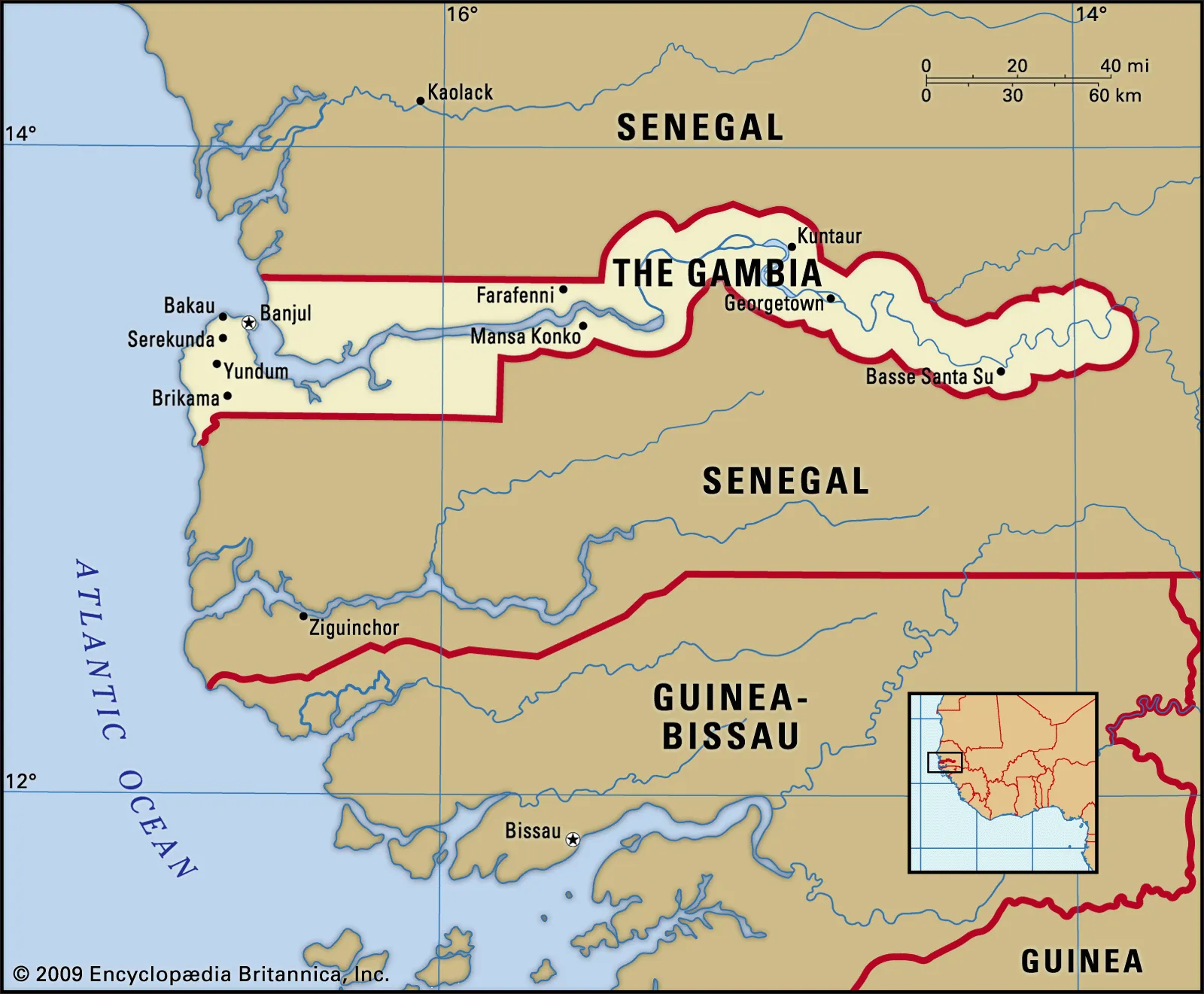
The Gambia, as a country in west Africa, shares in the general culinary traditions of its much larger neighbours. Its cuisine is based on peanuts, beans, squash, and fish, with its local ingredients being combined in ways that are savoury and tangy. Gambian cuisine, however, is also influenced by the very unique geopolitics of the Gambia. Numerous ethnic groups, such as the Mandinka, Wolof, Fula, and Bambara call the Gambia home, creating a melting pot of language and tradition. Couple this with the French influence from neighbouring Senegal, and Gambian cuisine becomes its own unique entity, etching out its own unique story and legacy, passed down through its food.
That idea of passing down a shared story is a fundamental part of Gambian identity, not necessarily through food per se, but through traditions of storytelling as a core part of identity. My music recommendation today isn’t just a singer whose music I enjoyed. Jobarteh is part of a long tradition of storytelling and performance, of speaking truth through performance, and of a tradition that has fundamentally shaped the world of modern music. While I’m aware this is a food blog, I’d be remiss not to discuss the importance of Griots in west African tradition, and the influence they’ve had on modern music.
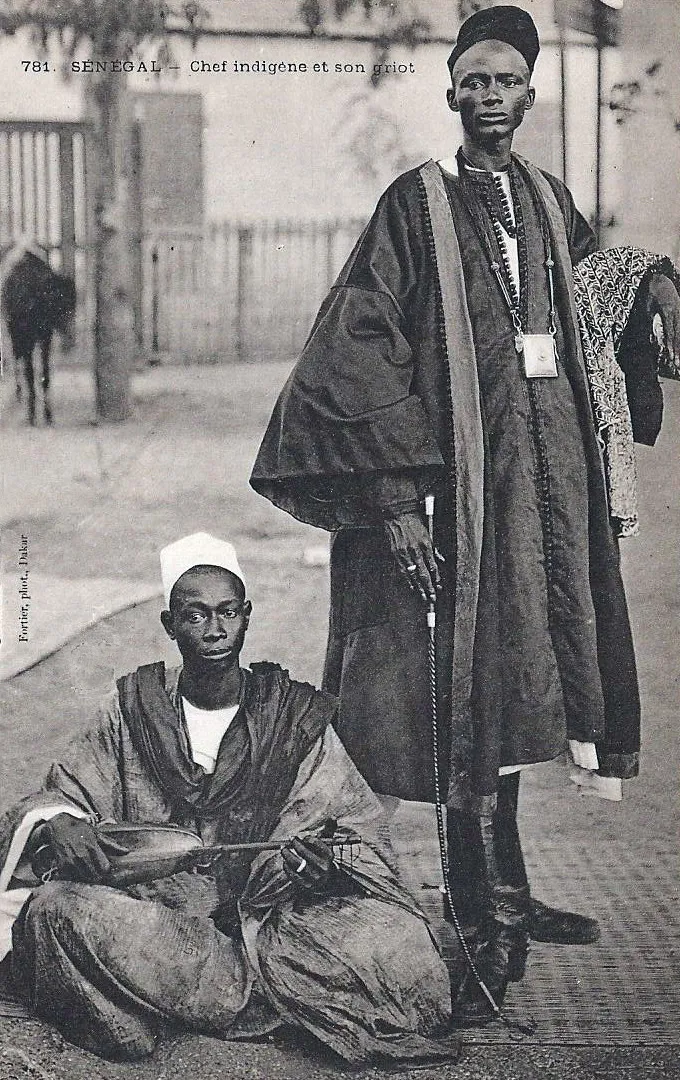 A photograph taken by Francois-Edmond Fortier in the early 20th century of a Wolof chief in Senegal and his griot (Source: Wikipedia)
As a note in discussing the history of griots and their role within west African societies, there is some degree of disagreement around the term “griot” itself. However, since it’s the term most griots seem to use to refer to themselves, it’s the term I’m going to use here.
While they may first appear in the written record in the 14th century, griots are an important part of west African society, particularly for nobility. Griots were (and still are, to an extent) musicians, oral historians, praise singers, and storytellers. While many travelled throughout west Africa, sharing stories and performing, others remained connected to a particular village or court. Nobility, for instance, maintained griots within their courts, both as entertainers, and as hype-men, announcing their arrivals through recounting their deeds and achievements wherever the king went. They also served as councillors, sharing wisdom and advice.
While it might be tempting to draw an analogy to a European troubadour or bard, this analogy would miss much of the nuance of what griots actually were and what they meant to their surrounding communities. The community relied on their griot, while also seeing them as existing in a separate caste from the community proper. Indeed, griots were and still are a separate caste within some west African societies, intermarrying solely within the griot community and passing the traditions through bloodlines. This has created a scenario where there are hereditary griot families (to one of which today’s musical recommendation belongs).
Through their role, both as oral historian and keeper of a communal heritage, and through being a separate caste and speaker for an - at times - oppressive ruler creates a complicated relationship between griots and west African society as a whole. While west African society is far from monolithic, the treatment of griots has ranged from being seen as almost akin to nobility, to being buried separately so they could not pollute the earth with their remains. Similarly, to what extent the griot tradition still exists within west Africa is controversial, with the answers varying depending of who is asked.
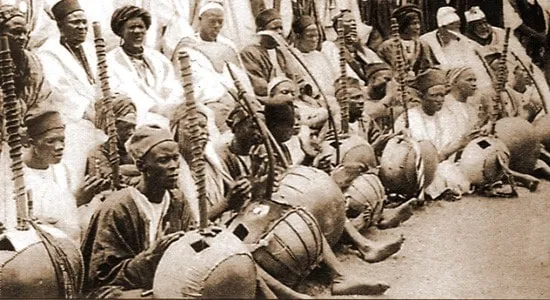 A 1925 gathering of griots with their koras (Source: Babathestoryteller.com)
That griots were a vital part of west African tradition, however, did not render them immune from the Trans-Atlantic slave trade. Griots were among the millions of people forcibly torn from Africa and abducted to the Americas as enslaved labourers, though like the millions of others beside them, their traditions travelled on the boats alongside them. In addition to food and language, the griots brought their stories and songs, continuing to share them on the plantations of the Americas. One of the most common forms of song associated with enslaved peoples in the southern United States is the spiritual. While its themes are undeniably Christian, the musical style of call and response, of interspersing voices coming in at odd times in the rhythm, and of syncopation derive directly from west African musical tradition. The voices singing out on the plantations of the South were African voices, even while their voices sang the language of their captors, and even without the instruments that had defined their ancestral lands.
Much like griot tradition, however, the songs being sung by enslaved Africans were not solely songs. They were themselves acts of resistance against white oppressors. These spirituals shared a message that there was something better out there, while also being literal messages of resistance. Songs like “Great Camp Meeting” were used to announce literal secret gatherings, taking the African tradition of singing out a history, and changing into what was needed - a sung hope and plan for the future.
While griots were absolutely not the only ones singing on Southern plantations, the act of song acquired a very particular meaning within African American culture. Even while consistently derided by white Americans, spirituals and African rhythms remained a core part of African American identity, being sung and repeated through generations.
It’s this music that has formed the backbone of much of America’s musical corpus. Blues, jazz, rock and roll, hip-hop, and rap, among others, trace their musical lineages directly back to the songs sung on southern plantations, and the mark they’ve left on Black culture. With rap and hip-hop especially, the tradition of rhythmically speaking a story is one that has been found in west Africa for centuries. The music we listen to today is the sound of west Africa, filtered through centuries of trauma and survival and hope, but west African nonetheless.
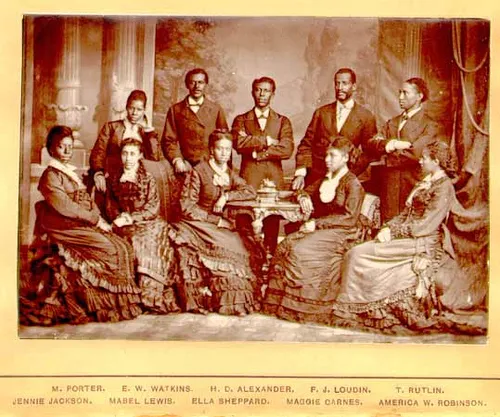 The Fisk Jubilee Singers, one of the first traveling choirs to popularise spirituals for white audiences, in 1867 (Source: music.allpurposeguru.com)
It’s here that we come back to the griot and the conception of what it is to be a griot. This discussion of the influence of griots and of west African musical tradition more generally on American music - and therefore, due to American cultural hegemony, the sound of humanity’s music - has more or less skipped over the fact that griots are still part of west African culture and tradition, and have been for centuries. Their role within African societies has been complex, both because they have existed as part of potentially oppressive royal courts, and because they have been important sources of oral history and tradition. The term “griot” has a split meaning, with it coming to mean something different for those who have remained within the west African griot tradition, and those who are reclaiming it.
In reading articles for this post, I found the split between historians and musicologists on whether rappers could be considered “modern griots” interesting. Sociologists like Damon Sajnani who argue that, because of their association with power, for Senegalese rappers, being called a “griot” would be considered an insult, as they see their music as standing in opposition to unjust power structures rather than in support of them, as griots have historically done. Historians like Frederick Gooding Jr, on the other hand, trace the very act of engaging with griot music as an act of rebellion against a white supremacist system, linking modern rap and hip-hop directly to griot traditions through that common thread of identity and resistance. Whether the griot tradition is considered “empowering,” something to be shied away from, or a recrafting of historical identity into a shared diaspora narrative ties directly into the lens through which one views griots and the role they actually played.
The influence of griots on humanity’s shared culture, however, is undeniable. When we listen to music, most likely, there is some element of west Africa in our shared song.