

Vegan Tsuivan
Ingredients
For the noodles:
2 1/4 cups (270g) flour
1 cup (240ml) water
For the broth:
4 portabellas, sliced into strips
1 carrot, thinly chopped
1 potato, peeled and thinly chopped
1 onion, sliced into half moons
3 cloves garlic, minced
1/4 head cabbage, shredded
2 green onions, chopped
Salt
Pepper
Instructions
- Combine flour and water in a bowl, mixing to form a dough. Cover and let rest for at least half an hour.
- After the dough has rested, roll it out into a thin sheet. Coat the top of the sheet in a bit of oil, then roll into a snake.
- Slice the dough-snake into pieces 1-2cm in width. Set these aside to settle.
- While the dough is settling, heat oil in a large pot over medium heat. Once hot, add the onion and garlic and cook until soft (~3-4 minutes).
- Add the carrot, potato, and cabbage, and cook for another 2 minutes.
- Add the mushrooms, salt, and pepper, and stir to combine.
- Add enough water to cover the vegetables, then add the noodles in a layer on top of them.
- Bring the water to a boil, cover, then lower to a simmer. Let steam for at least 15 minutes, or until the noodles are cooked.
- Uncoil the noodles and serve.
A longer and more detailed description
Look, man. This project has taken me to a lot of places I didn’t expect to go. Do you think I knew anything about Andorran cuisine when I started this? That Pacific Island cuisines are difficult to cook? Of course I didn’t, why would I. And yet, with every country, I was confident I could find something. Even in the most meat-happy of countries, everyone, somewhere, has to eat vegetables eventually. The French love affair with butter could be substituted. The Pacific Islands have their coconuts and kumaras. Italians have a bivvy of adaptable desserts.
Except one. There was one country on the list that, every time I looked at it, I looked away, because everything I knew about it said this, this was the country where vegetables are anathema.
And here we are.
And I’ll be honest, it turned out better than I thought? Let’s be clear, there are some extensive modifications, and I don’t think this is recognisable as tsuivan anywhere outside this kitchen. But between you and me? I’ve faced the scariest country on this list. It’s all easier from here.
Start by making noodles. Another fun element of this project is how many different ways I get to make noodles. These weren’t my favourite, but they’re good fun. Combine flour and water and let it sit. While it’s sitting, cook your vegetables in oil. While they’re cooking, roll out your dough as flat as you can, adding more flour if it’s too sticky. Add oil to the surface, then roll it into a snake so your noodles become fake cinnamon rolls. Slice your snake into chunks. Add water to your vegetables, then a layer of noodles. Bring it all to a boil, then steam until it’s cooked. Once everything is steamed, use a fork to uncoil the noodles. If this is difficult, no worries! The cinnamon rolls are just as good coiled. Add salt, pepper, and green onions, and serve. Сайхан хооллоорой! Or, to break your computer’s ability to render this article,
ᠰᠢᠻᠠᠨ ᠻᠥᠯᠯᠥᠷᠣᠢ !
Substitutions and suggestions
For the vegetables - Feel free to use whatever vegetables you’d like here. I really liked these because they gave it a nice earthy feel, but any root vegetables should work here.
For the portabellas - You’re welcome to sub these out as well, but I really liked the meaty texture of the strips. They added a nice amount of body to the dish.
For the spicing - My partner and I disagreed about the amount of salt, pepper, and soy sauce this required. He was much lighter than I was, but I added all three. It is entirely up to your discretion.
What I changed to make it vegan

Well, okay. Not the noodles. But this dish is ordinarily made with meat and noodles and nothing else. I did not do that.
What to listen to while you make this
Might I suggest the dulcet tones of Uuhai?
A bit more context for this dish
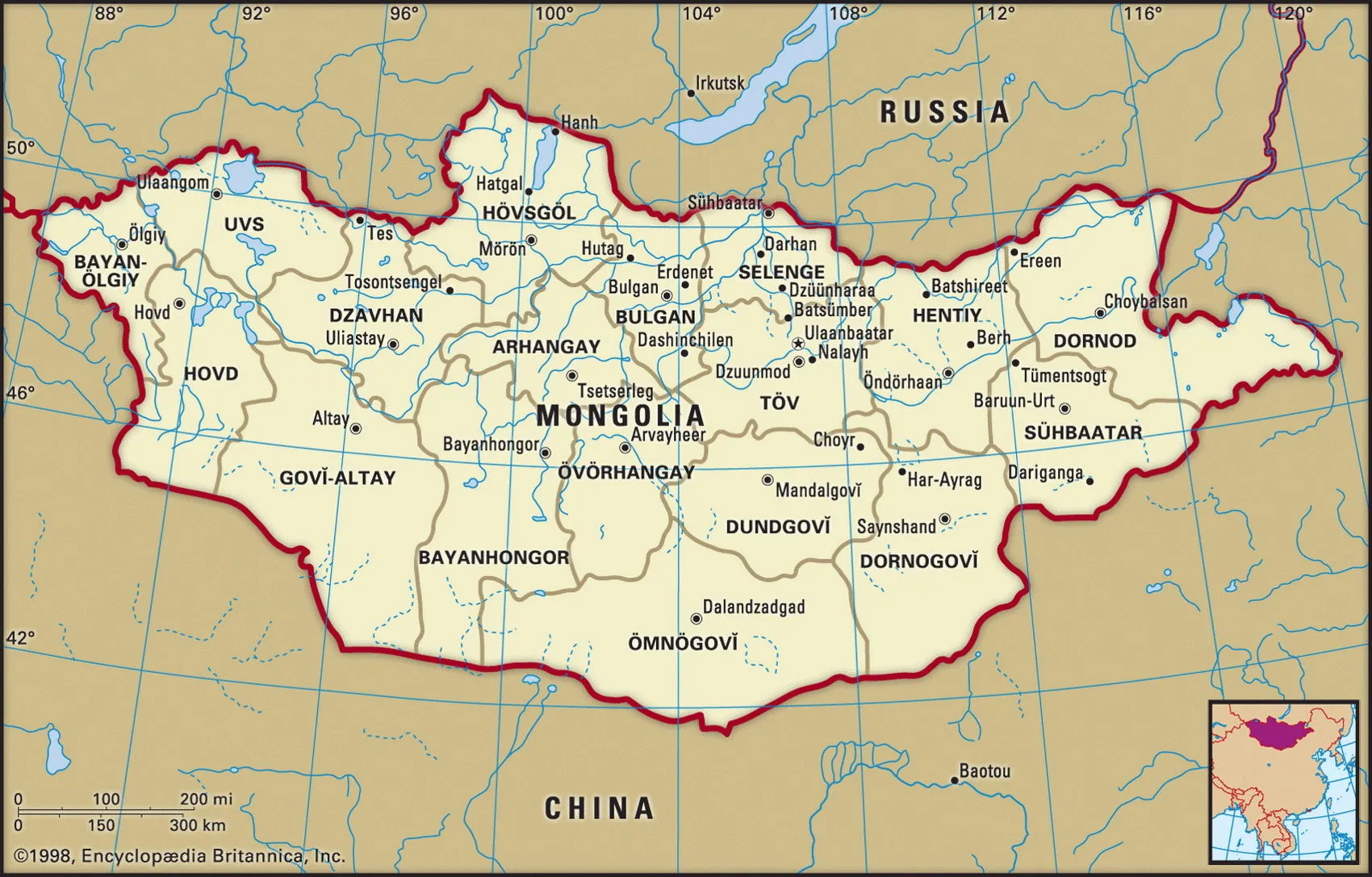
I would love to visit Mongolia some day. It has been on my list of places I would love to see for decades now. It’s the single least densely populated country in the world (other than the Sahrawi Republic, which has issues with its demographic data), with just kilometre after kilometre of land. When I get it in Geoguessr, I know pinpointing will be nearly impossible, but that doesn’t change me getting caught up in the beauty of the way the grass flows, the sun hits the lakes, the way the landscape rises and falls like the endless herds grazing upon it. Its language is unlike any I’ve heard, its written script is beautiful, and its towns are protected by massive shrines to the horses that have come to define it. It is a deeply unique place, and I want to get lost in the stark, lonely beauty of it.
One of the things that has stopped me, however, is the knowledge that I will not be able to eat while I went on this hypothetical trip to Mongolia. Meat is fundamental to Mongolian cuisine, and where meat is not available, milk is. Camel milk, yak milk, horse milk, sheep milk, and goat milk are turned into tea, alcohol, cream, cheese, and yoghurt, served alongside a bivvy of meat products. What vegetables are available are those that have been traditionally found as part of a nomadic lifestyle - wild onions, garlic, apples, and berries, but with the cultural understanding that these were a food of last resort. The traditional cuisine of Mongolia is one of meat, milk, and what the creatures of the steppes can provide.
You see the problem.
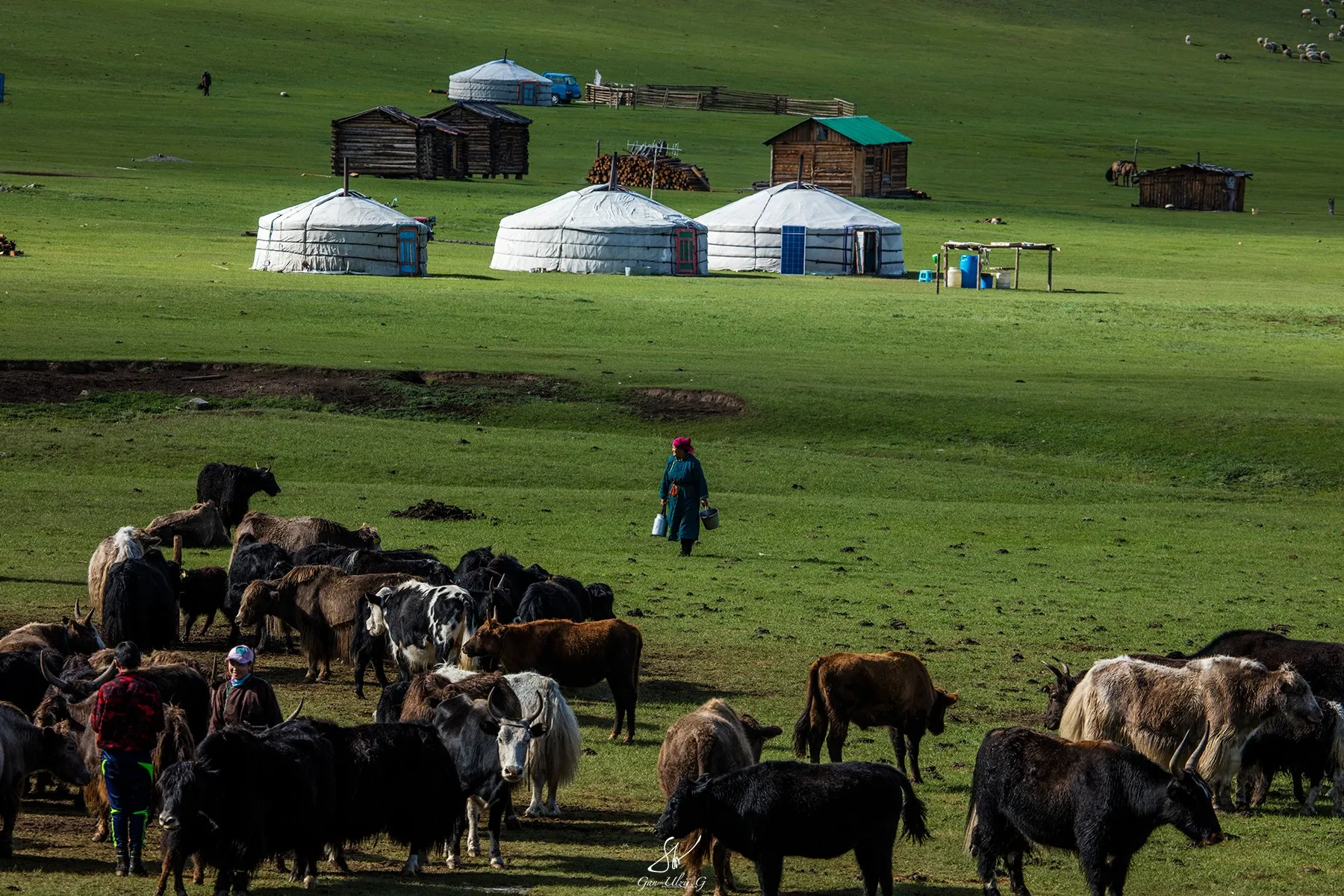 Traditional herders in Mongolia
People have been herding in Mongolia for at least 5000 years. That herding is so prevalent is a consequence of Mongolia’s harsh climate. Its climate features short summers and long, cold winters defined by Siberian storms. It is a harsh place to live, much less to grow crops, and so traditional Mongolian life has long relied on being able to move across the steppes, finding food for herds and surviving as best as possible. The horsemen that are the iconic images of Mongolia have been traversing the steppes for millennia, with horses being a fundamental part of life.
Mongolia, by virtue of its continental location, is also extremely vulnerable to climate change. This is especially true for its nomadic herders. When life is precarious, the slight shift in climate can cause utter devastation for those who cannot adapt.
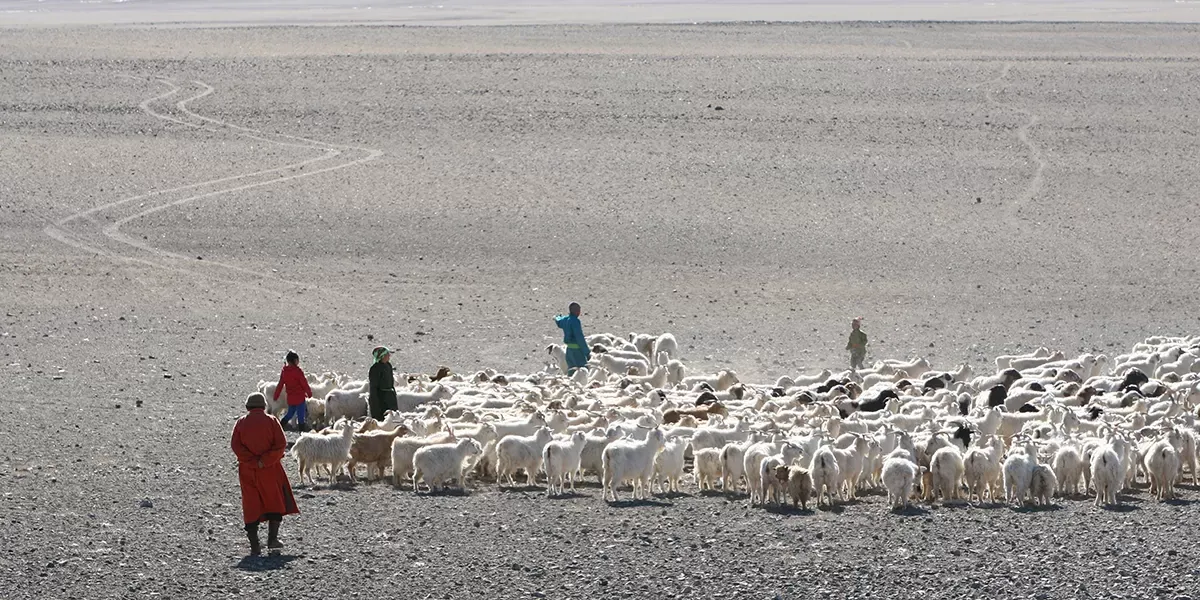 Mongolian herders with goats (Source: UNDP)
Climate change has hit Mongolia harder and faster than other parts of the planet. Its normally harsh winters have become harsher, in some cases freezing the herds where they stand. In 2010, 25% of Mongolia’s herd animals died in a harsh winter. This was repeated in 2024.
Because of the reliance on herd animals, when these animals die, it isn’t simply a tragedy for those creatures’ sakes, or even for their herders. Instead, this causes a ripple effect across the entire country, with food prices skyrocketing. Even those who are not directly reliant on the herds are indirectly reliant, and suffer from food insecurity when the herds die.
In other cases, herds are unable to find grazing land in the spring, leading to starvation. While herders have tried to supplement the herds’ food with purchased animal feed, this has left herders unable to afford food for themselves. In desperation, many have abandoned their nomadic way of life and instead, moved to Ulaanbataar. Once in Ulaanbataar, however, conditions are not much better, with impoverished families burning raw coal to stay warm in the increasingly intense winters. This, in turn, leads to respiratory conditions throughout the city and children dying because of the toxic air.
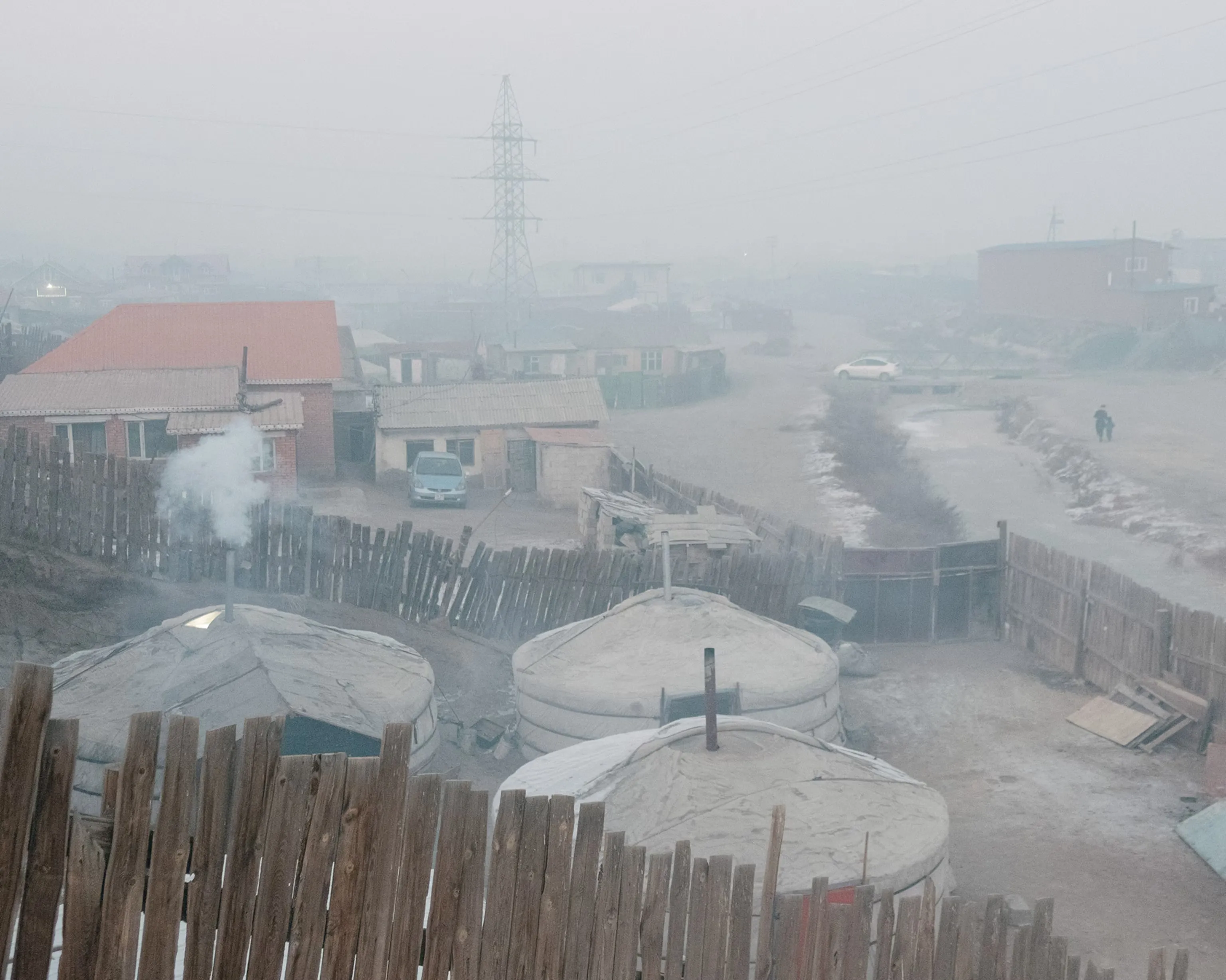 Ulaanbataar in winter (Source: National Geographic)
Climate change will impact us all. The world you or I grew up in is long gone, and the world that will exist in a century or so will be unrecognisable. Mongolia serves as a warning of what climate change will look like and how thorough it will be.
For thousands of years, Mongolia’s herders have been able to practice their traditions, maintain their lives, and build for themselves a world and a culture in one of the planet’s harshest environments. Through the actions of people thousands of kilometres away, that world is being destroyed.