
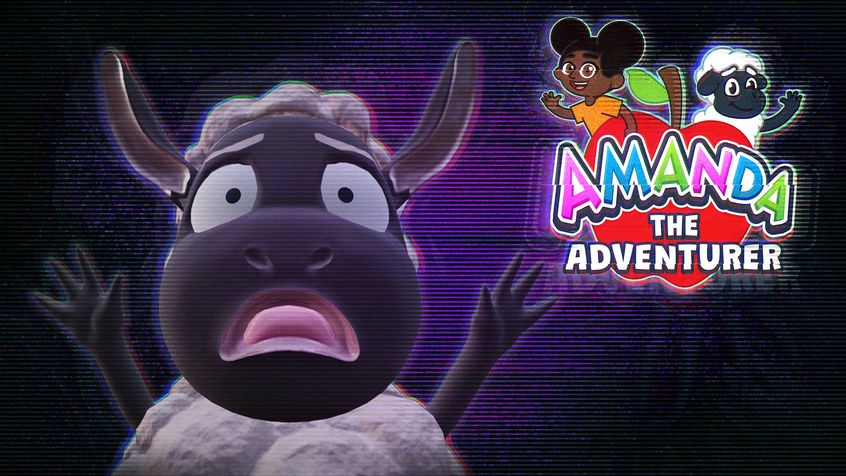
Amanda the Adventurer Review
Horror is such a subjective thing. What is scary to one person is not guaranteed to be scary to another. This becomes especially obvious when looking at what different generations find scary. I’m a millennial. The creature features that dominated the world before I existed don’t scare me. I don’t care about what descends out of the sky, rises from below, or wants to eat me in a variety of ways. Jason’s welcome to come stab me repeatedly - it will free me from the impossibility of meaningful existence under student loans, spiralling housing costs, and AI rendering everything I define myself by as pointless. Give me the Babadook or We Need to Talk About Kevin, and that idea that I could be trapped in an existence I don’t want to have because of forces I did not choose, and from which I am encouraged to never want to escape. Existential dread resonates, because it allows me to gain at least a little bit of catharsis from the dystopian capitalist hellscape that is my actual lived reality.
Compare this Gen Z’s idea of horror and what tropes resonate with them. Unlike millennial horror, Gen Z horror focuses on turning the mundane into the horrifying. Something like the Backrooms or the SCP series exists in that realm of the surface-level and ordinary having a deeper meaning, with that deeper meaning ultimately being something to fear. There is safety in sticking to the shallows, but should one venture beyond them, there lies the double-edged sword of knowledge and terror. To know is to be afraid and to understand that there are monsters.
There is an entire separate essay to be written about these distinct eras of horror and why each of them is the way it is. This is not that essay. This is, instead, a review of Amanda the Adventurer and why I think I am perhaps not its intended audience.
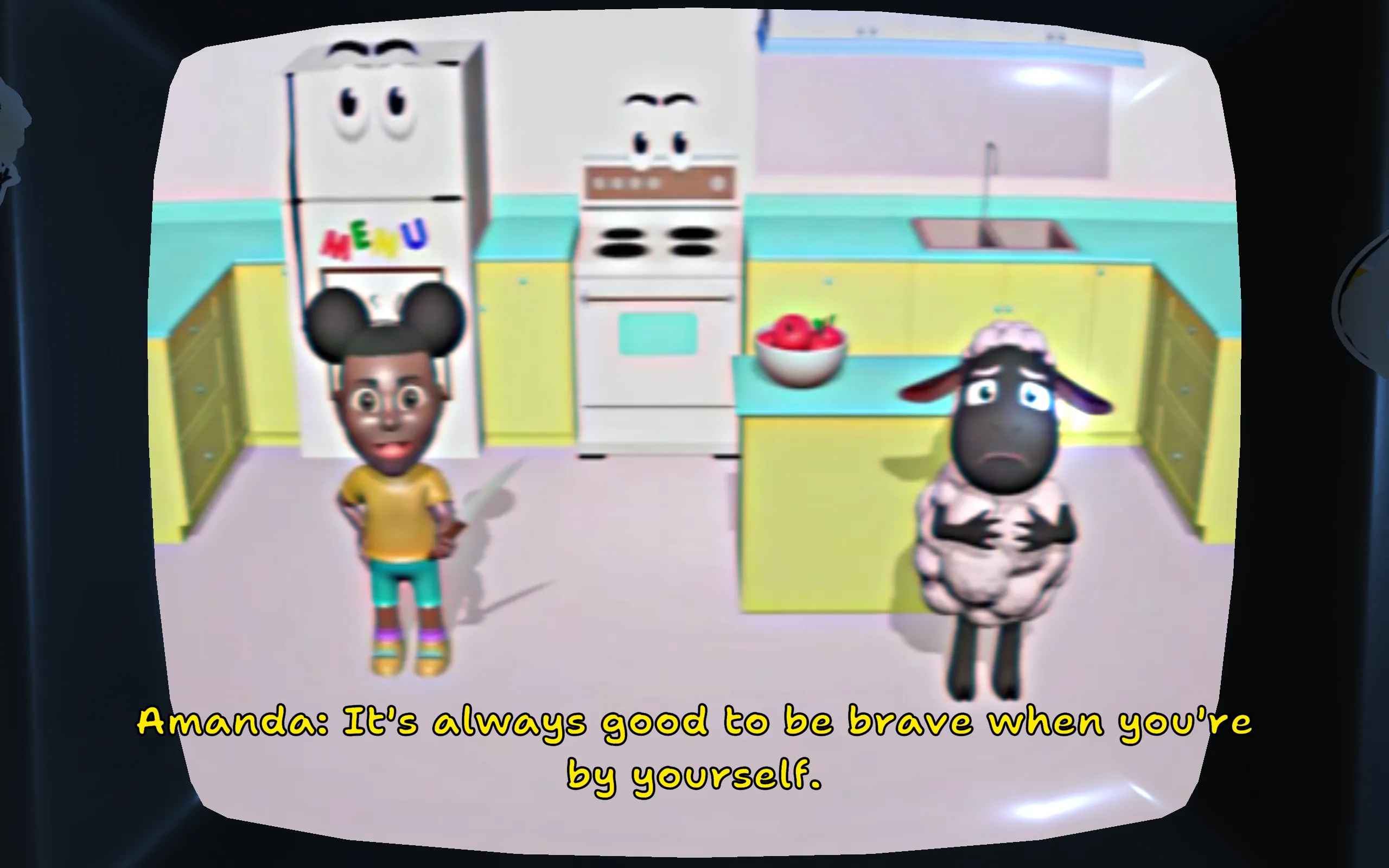 I do try, Amanda. I do try.
Amanda the Adventurer is a puzzle horror game. You play as Riley, an investigator examining the attic of a house. Finding old VHS tapes of a children’s show, Riley begins to watch, and in so doing, awakens something she never meant to find.
Amanda the Adventurer’s gameplay is fairly straightforward. Players follow clues provided by a series of VHS tapes to unlock secrets contained within the attic. If, for instance, a VHS provides instructions on how to bake a pie, players can then use these instructions with the easy bake oven in the attic to unlock a clue. The tapes influence the world, and the world influences the tapes, creating a system of interlocked and evolving clues.
The fundamental horror within Amanda the Adventurer comes from both the fact that the investigator is locked in an attic, and from the tapes themselves. As the player watches the tapes, it becomes clear that there is something darker going on behind the scenes. What ought to be a light-hearted children’s show instead delves deeper and deeper into the eerie and unsettling, with jumpcuts to blood, gore, and rot.
This presentation reflects a style of horror that, as alluded to above, feels more in line with a Gen Z understanding of the terrifying. In delving below the surface, the player gains both a greater understanding of the world, while pairing it with a deep horror. There is a literal monster that prowls the attic, and should the player wander too far in a particular direction, it will emerge to devour them. It is the Backrooms and SCP all rolled into one.
It is also not a style of horror that particularly appealed to me. Flashing unsettling images and doing occasional jump scares didn’t particularly scare me, nor did it help me get invested in the world. More than anything, it felt almost rote, as if being a spooky kids’ show was a series of tropes that needed to be checked off, and everything else was an afterthought to meeting those criteria.
Without the worldbuilding hooking me and reeling me in, then, I was left with the gameplay and the puzzles. These, unfortunately, didn’t quite do it for me either.
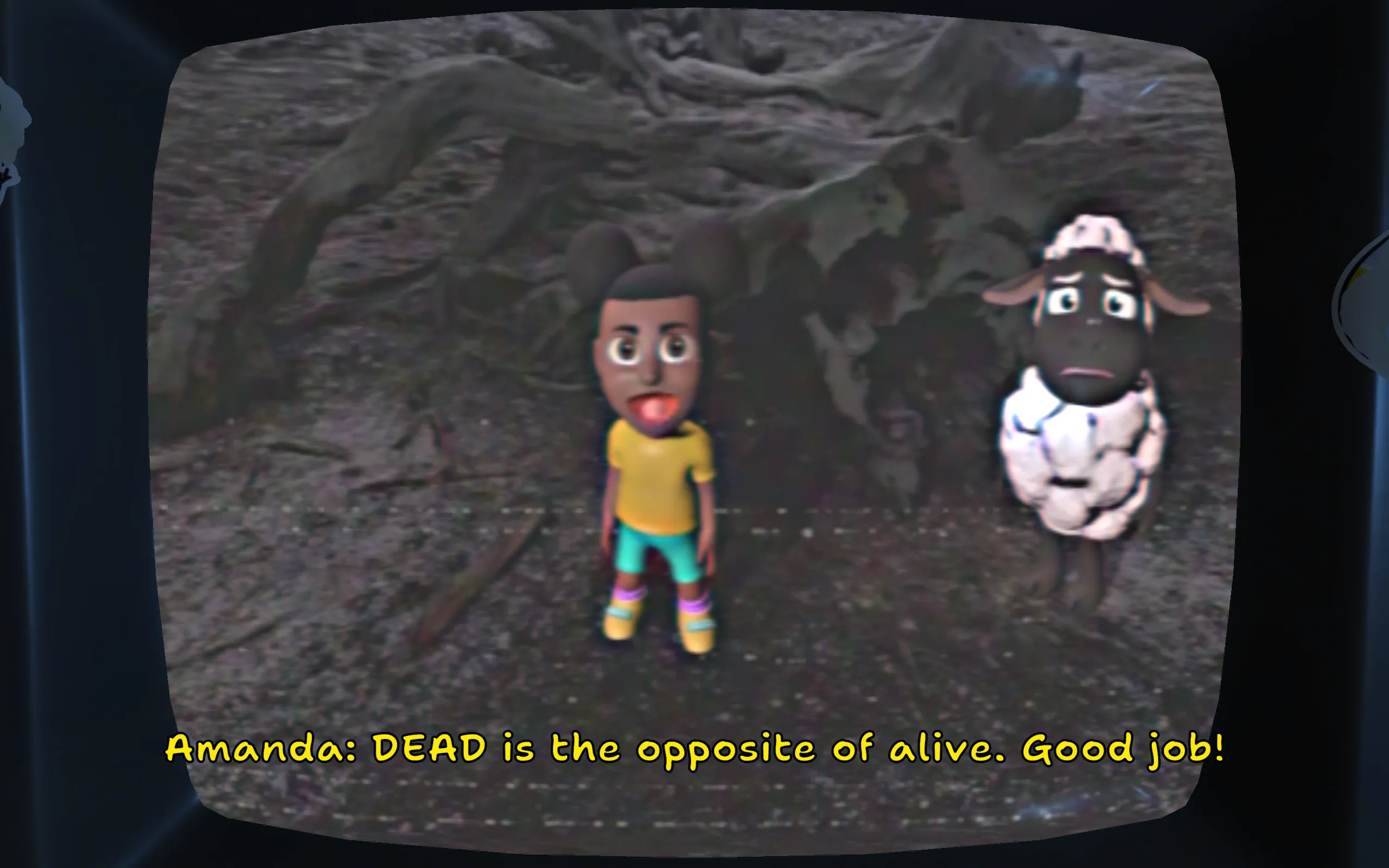 Excuse me, I believe the Gen Z-accepted term is "unalived." Gotta be algorithm-friendly.
Amanda the Adventurer’s puzzle design is a bit escape room-esque. Solving one puzzle unlocks the components for the next puzzle, with all puzzles being nominally visible from the outset. There is a specific order in which puzzles must be solved, but understanding which solution you’ve uncovered is as much a part of the puzzle as the puzzle itself.
I enjoy this style of puzzling, and when done well, it can be an absolute treat to uncover. This is part of why I enjoy Blue Prince so much, even if there does come a point where it’s easy to get frustrated. Amanda the Adventurer takes this framework, but chooses to place the emphasis on the VHS and horror elements rather than the puzzles. The puzzles themselves are fairly straightforward with the main frustration in them being the occasional object hunt. There is very little challenge in them for a seasoned puzzler. This means that, should the horror not land for a particular player, the puzzles aren’t particularly able to pick up the slack.
Seeing as the horror didn’t work for me, what I was left with was a game that felt like it was trying too hard to unsettle me and failing, then leaving me with children’s puzzles as a consolation prize. Like me sadly playing with the block sliding game in a doctor’s waiting room, there just wasn’t enough there for me to feel like I wasn’t wasting away a couple hours of my life.
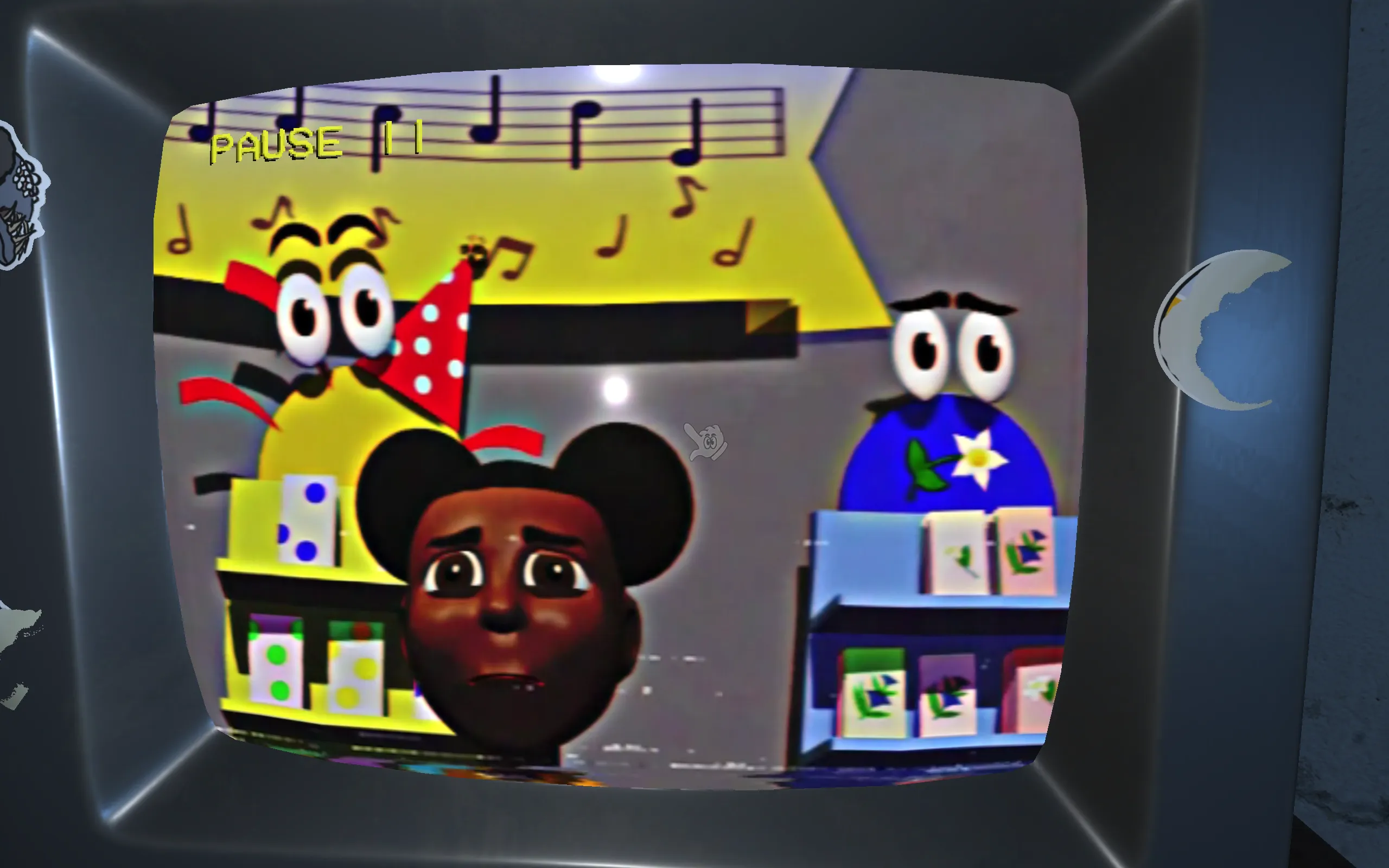 I know, child, and I'm sorry, but I am an adult, and you don't scare me.
While I can see what Amanda the Adventurer is trying to achieve, and while it clearly does land for others, for whatever reason, it didn’t land with me. Maybe I’m too old for this style of horror, too jaded to care about the monsters below the surface, or have done too many escape rooms to get tripped up by the puzzles, but Amanda the Adventurer left me with a sense that I was playing a game never meant for me. Its conception of horror isn’t one I understand, and so all I was left with was puzzles that felt too simple and a story too incomplete.
Developer: MANGLEDmaw Games
Genre: Horror, Puzzle
Year: 2023
Country: Canada
Language: English
Time to beat: 2-3 hours
Playthrough: https://youtu.be/Y2-qPjmMFXw